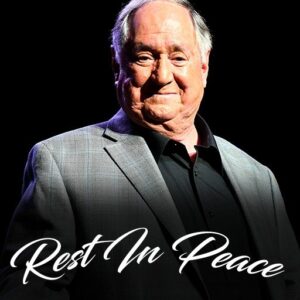
Patrick Hardison’s story is one of extraordinary courage, tragic injury, medical innovation, and ultimately — hope. A volunteer firefighter from Mississippi, Hardison suffered catastrophic burns in the line of duty that left him unrecognizable and profoundly altered his life. Years later, thanks to a landmark medical breakthrough, he became the recipient of the most extensive face transplant ever…
Patrick Hardison’s story is one of extraordinary courage, tragic injury, medical innovation, and ultimately — hope.
A volunteer firefighter from Mississippi, Hardison suffered catastrophic burns in the line of duty that left him unrecognizable and profoundly altered his life.
Years later, thanks to a landmark medical breakthrough, he became the recipient of the most extensive face transplant ever performed.
His journey spans decades of pain, perseverance, cutting‑edge surgery, and a powerful reminder of the possibilities of modern medicine.
A Volunteer Firefighter’s Worst Nightmare
Patrick Hardison was a volunteer firefighter in Senatobia, Mississippi, in September 2001 when he responded to a distress call that would change his life forever.
On that fateful day, Hardison entered a burning home on a rescue mission, believing a woman might be trapped inside. As he worked to fight the blaze, the roof suddenly collapsed, burying him under debris.
At such close range to intense flames, Hardison’s protective mask began to melt onto his face and scalp — an almost unimaginable heat that left him with severe burns.
He managed to escape the burning structure, jumping out of a window with his head and upper body engulfed. Though alive, the injuries he sustained were devastating.
He suffered third‑degree burns across his entire face, head, neck, and upper torso. The fire destroyed his:
ears
lips
most of his nose
most of his eyelid tissue
hair and eyebrows
He was, quite literally, burned beyond recognition.
In the immediate aftermath, medical teams did what they could to keep him alive. Surgeons covered his wounds with skin taken from other parts of his body, and he endured dozens of surgeries aimed at restoring function and appearance.
But these operations could not replace the complex structure of his facial tissues, and his face remained severely disfigured.
Life After the Accident: Pain, Isolation, and Endurance
In the years following the accident, Hardison lived with the physical and emotional consequences of his injuries.
Despite undergoing more than 70 reconstructive surgeries to improve his facial contours, he faced daily challenges that went far beyond the operating room.
Visual impairment was one of the most debilitating: because he had lost virtually all of his eyelid tissue, doctors had sewn parts of his eyelids shut or used complex grafts to protect his eyes, leaving him with severely limited eyesight.
Beyond physical function, Hardison’s appearance deeply affected his daily life. He often wore a baseball cap and sunglasses in public not only to protect his sensitive skin and eyes but also to cope with the stares and reactions of strangers.
Children would sometimes run away in fear, and many adults reacted with confusion or discomfort — a reminder of just how instinctive and emotional first impressions can be.
His struggle took a toll on his personal life as well. Hardison lost his marriage and saw his business fail.
He battled depression, chronic pain, and even addiction to prescription pain medication — coping mechanisms that too often accompany severe injuries of this scale.
His life had become one of endurance, survival, and isolation — but not without hope.
The Promise of Transplant Science
By the early 2000s, full face transplant surgery was largely theoretical. The first partial facial transplant had been performed in France in 2005, successfully helping a woman who had been mauled by a dog.
Since then, transplant teams around the world had expanded the scope of facial reconstruction, but none had attempted the level of complexity required to restore Hardison’s injuries.
Face transplant surgery is exceptionally challenging. It requires:
matching donor and recipient in blood type, tissue compatibility, facial structure, and skin tone
meticulous surgical planning to connect nerves, blood vessels, and bone
a team capable of maintaining organ viability while harvesting and transplanting tissues
a post‑operative plan to prevent immune rejection through lifelong medications
All of this made a full face transplant one of the most complex procedures in modern medicine.
Finding a Donor
The match that would make history came through LiveOnNY, an organ donation network. The donor was 26‑year‑old David Rodebaugh, a Brooklyn resident who had sustained a catastrophic brain injury in a bicycle accident and was declared brain dead.
His family graciously decided to donate his organs — not only his heart, liver, and kidneys but also his face — in the hope that others could benefit from their profound loss.
Rodebaugh’s mother, Nancy Millar, later said she felt her son’s face ought to “live on” by giving someone else a second chance at life.
Their shared spirit of service — both men linked to firefighting — made the match especially poignant.
A Medical Marathon: The 26‑Hour Surgery
On August 14, 2015, Hardison’s groundbreaking surgery began at New York University’s Langone Medical Center under the leadership of Dr. Eduardo D. Rodriguez, chair of the department of plastic surgery.
The procedure was unprecedented in its scope. For approximately 26 hours, over 100 medical professionals — including surgeons, nurses, anesthesiologists, and support staff — worked in two adjoining operating rooms.
In one room, Rodebaugh’s face and scalp were carefully removed, preserving as much tissue as possible. In the other, Hardison’s scarred facial tissues were meticulously prepared to receive the transplant.
The scope of the transplant was astonishing:
Facial skin from scalp to jawline
Ears and ear canals
Nasal cartilage and bone structures
Cheek and chin bone segments
Muscles that control blinking and eyelid function
This level of tissue transfer had never before been attempted. Surgeons had to reconnect tiny nerves and blood vessels with extreme precision. If circulation could not be established within critical windows, the transplanted tissue might not survive.
Before the surgery, Dr. Rodriguez told Hardison that his chance of survival was only about 50/50, underscoring the procedure’s risk and complexity.
But he also emphasized that without this surgery, Hardison’s quality of life would remain severely compromised.
Recovery and New Beginnings
Against the odds, the surgery was a success. Immediately after the transplant, surgeons observed healthy circulation in the new tissues, and Hardison’s new eyelids allowed him to blink for the first time in years — a transformative functional milestone that protected his vision and daily comfort.
In the weeks and months that followed, Hardison endured extensive rehabilitation: physical therapy to regain strength, occupational therapy to relearn daily tasks, and speech and swallowing therapy to adapt to his newly reconstructed facial structures.
Even though parts of his face still appeared different from what he once knew, the transplant dramatically improved his appearance and ability to function in everyday life.
By late 2015 and into 2016, Hardison’s transformation became evident. He could partly clear his vision, move his mouth with greater ease, and interact socially without the overwhelming fear of reactions that had shadowed him for years.
Observers noted that he had the contours of a normal face, with no visible scars from the transplant lines, and hair growth on his scalp began to resemble a natural hairline.
In public appearances following the surgery, Hardison spoke with humility about his experience, describing the transplant as having restored not just his face, but his sense of self. He told reporters that he felt “like a normal guy” for the first time in 15 years.
Life After Transplant: Challenges and Purpose
Despite the success of the operation, Hardison’s journey was far from over. He — like all transplant recipients — had to take lifelong medications to suppress his immune system and prevent tissue rejection.
Regular medical check‑ups and monitoring became part of his daily rhythm.
He also had to adapt psychologically to a face that, while functional and expressive, was not the one he was born with.
This process — known among transplant recipients as identity reintegration — can be emotionally complex. Hardison met Rodebaugh’s mother after the surgery, and their emotional connection became an important chapter in his healing.
His oldest daughter, Alison, recalled how deeply meaningful it was to see her father without the baseball cap and sunglasses he had worn for so many years.
Before the transplant, he told her, “I won’t have to wear my ball cap and my sunglasses. I’ll look normal whenever I get to walk you down the aisle.” The moment captured the profound personal impact the surgery could have on his relationships.
Today, Hardison has embraced a purpose beyond his own physical restoration. He has used his experience to spread hope and encourage others facing disfigurement, trauma, or seemingly insurmountable obstacles.
He has spoken publicly about his journey, shared his perspective on resilience, and even worked on projects such as writing a book to chronicle his incredible life story.
A Legacy of Courage, Medical Innovation, and Humanity
Patrick Hardison’s life stands as a testament to human bravery and the evolving power of modern medicine. From the terrifying moment he was engulfed in flames during a rescue to the grueling transplant surgery that restored his face, his story bridges tragedy and triumph in a way few people experience.
His case also pushed the boundaries of what surgeons believe is possible, advancing the field of facial transplantation and offering hope to countless others with severe injuries.
By including not only facial tissue but also the scalp and functional eyelids, his surgery set a new benchmark and demonstrated what meticulous surgical planning and teamwork can achieve.
At its core, Hardison’s journey reminds us that medical progress is deeply human — driven by the vision of doctors willing to take risks for their patients, by families who make selfless decisions in the face of loss, and by individuals like Patrick who choose to seek life, connection, and possibility even in the darkest chapters.
Conclusion: A Life Rebuilt
From a courageous firefighter injured in the line of duty to the recipient of one of the most groundbreaking surgical procedures in medical history, Patrick Hardison’s story is both a tribute to the resilience of the human spirit and a milestone in reconstructive surgery.
Facing unimaginable pain and profound changes to his identity, he refused to surrender his future. Through innovation, community support, and his own determination, he reclaimed his life — and in doing so, gave hope to others who face their own battles.
Patrick once said simply, “They have given me a new life.” That statement captures not only the physical gift he received but also the emotional and psychological rebirth that followed one of modern medicine’s most remarkable achievements.